

Eat for Your Smile, Skin & Longevity: How Nutrition Shapes Healthy Aging From the Inside Out
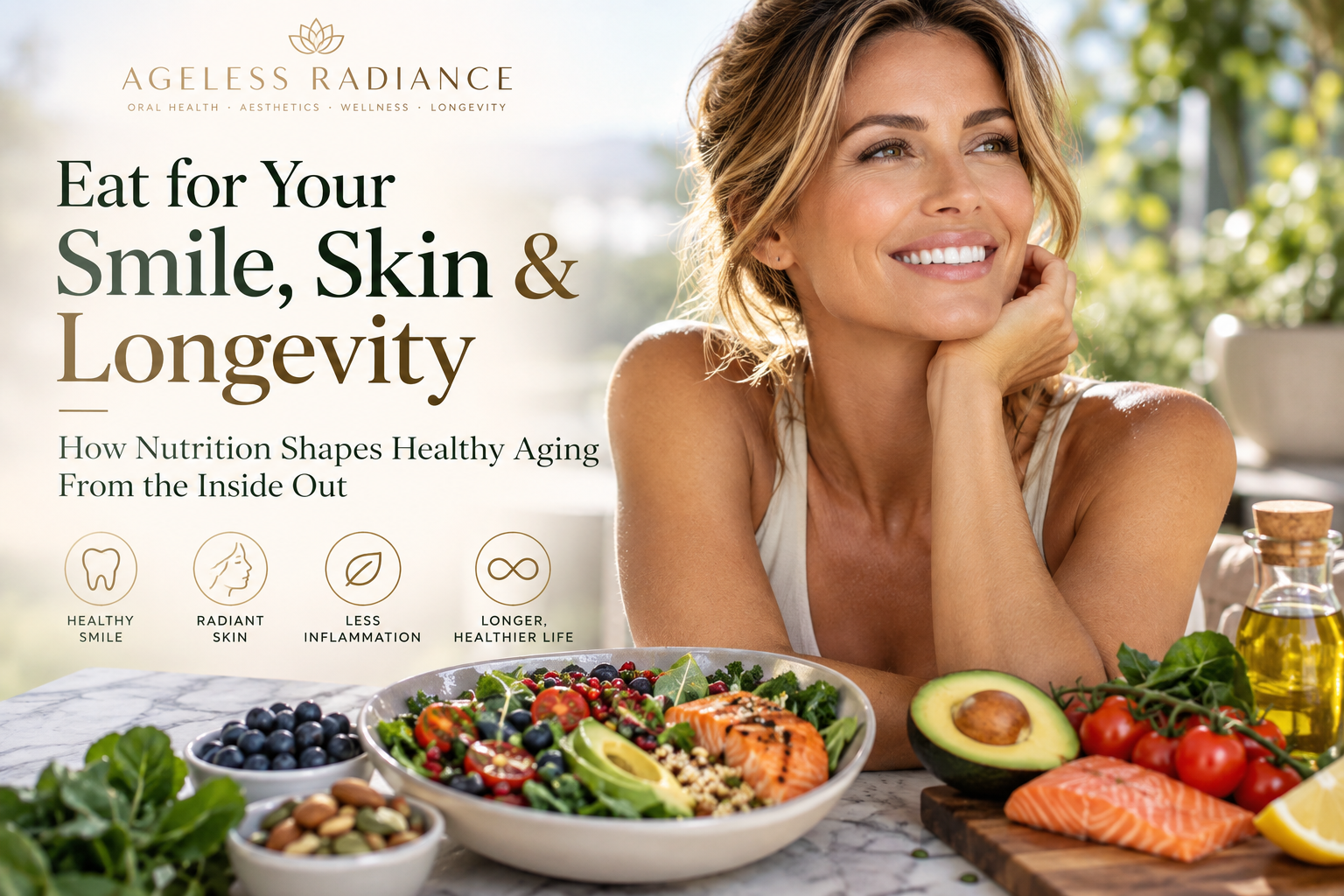
How Nutrition Shapes Healthy Aging From the Inside Out
When we think about healthy aging, we often focus on what we can see: smoother skin, a brighter smile, stronger hair, or a more youthful appearance. But some of the most important factors influencing how we look and feel as we age begin much deeper. Nutrition is one of them.
The foods we eat provide the building blocks our bodies use to maintain our teeth and gums, produce collagen, repair tissue, support muscle and bone, regulate inflammation, and protect cells from oxidative stress. At Ageless Radiance Renewal & Wellness Center, our philosophy is simple: healthy aging works best when we address both the inside and the outside.
The Mouth May Tell a Bigger Story
Your mouth is not separate from the rest of your body. Poor nutrition can affect the tissues that support the teeth, while chronic inflammation and inadequate nutrient intake may interfere with normal tissue maintenance and healing. Protein, vitamin C, vitamin D, calcium, phosphorus, and other micronutrients all contribute in different ways to maintaining oral tissues, teeth, and bone.
A diet centered around nutrient-dense whole foods does more than support general health—it can be an important part of maintaining a healthy smile throughout life. And oral health matters beyond appearance. Maintaining healthy teeth and gums helps preserve comfortable chewing, which in turn makes it easier to continue enjoying a varied, nutritious diet as we age.
Beautiful Skin Is Built From Within
Aesthetic treatments can do remarkable things for aging skin, but even the best treatment cannot replace the basic materials the body needs to maintain and repair tissue. Collagen is a protein, which makes adequate dietary protein particularly important as we age. The body also requires nutrients such as vitamin C for normal collagen synthesis.
Foods that support a skin-conscious diet include:
- Fish and other quality protein sources
- Eggs
- Beans and lentils
- Leafy green vegetables
- Berries
- Citrus fruits
- Tomatoes and colorful vegetables
- Nuts and seeds
- Avocados
- Extra-virgin olive oil
Fatty fish such as salmon also provides omega-3 fatty acids, while colorful fruits and vegetables supply an array of naturally occurring antioxidants and phytonutrients. Think of nutrition as providing the raw materials your skin needs while aesthetic treatments work from the outside.
Inflammation and Aging
Inflammation is an essential part of the body's normal immune response. The problem arises when inflammatory processes remain chronically elevated. Lifestyle factors—including diet, sleep, physical activity, tobacco exposure, stress, and metabolic health—can influence inflammatory pathways.
A dietary pattern dominated by highly processed foods, excessive added sugars, and refined carbohydrates can make it more difficult to maintain optimal metabolic health. In contrast, eating patterns rich in vegetables, fruits, legumes, whole grains, nuts, fish, and unsaturated fats are consistently associated with better cardiovascular and metabolic health. This is one reason Mediterranean-style eating patterns receive so much attention in healthy-aging research.
Eat the Rainbow—There Is Science Behind the Advice
The colors in fruits and vegetables often reflect naturally occurring plant compounds. Deep blue and purple foods such as blueberries contain anthocyanins. Tomatoes contain lycopene. Orange vegetables contain carotenoids. Leafy greens provide folate, carotenoids, vitamin K, and numerous other nutrients.
No single "superfood" is going to stop aging. A colorful, varied diet, however, helps provide a much broader spectrum of nutrients than relying heavily on a small number of foods or supplements. Instead of searching for one miracle ingredient, build variety into your plate.
Don't Forget Protein as You Age
Protein becomes especially important during healthy aging because maintaining muscle mass is closely connected with strength, mobility, independence, and metabolic health. Good sources include fish, poultry, eggs, Greek yogurt, cottage cheese, beans, lentils, tofu, and other minimally processed protein-rich foods. Protein also supplies the amino acids needed throughout the body for tissue maintenance and repair.
Rather than concentrating nearly all of your protein at dinner, many adults may benefit from including a quality protein source throughout the day. Individual requirements vary—particularly for people with kidney disease or other medical conditions—so personalized dietary recommendations should be discussed with an appropriate healthcare professional.
Healthy Fats Deserve a Place on the Plate
For years, dietary fat was treated as something to avoid. We now understand that the type of fat matters considerably. Foods such as extra-virgin olive oil, nuts, seeds, avocado, and fatty fish provide unsaturated fats that can be incorporated into a heart-conscious eating pattern.
That doesn't mean unlimited quantities—these foods are energy dense. But replacing some saturated fats and highly processed foods with unsaturated fat sources can be part of a balanced approach to long-term health.
Sugar: It's Not Just About Your Waistline
Frequent exposure to added sugars has obvious implications for dental health, as oral bacteria metabolize sugars and produce acids that contribute to tooth decay. But excessive added sugar also matters from a broader metabolic perspective.
Frequency is a particularly important factor. Constant sipping on sweetened beverages or repeatedly snacking on sugary foods exposes the teeth to repeated acid challenges throughout the day. Water remains one of the simplest choices for both oral and overall health.
Hydration Matters More Than You Think
Adequate hydration supports normal physiological function throughout the body—and is equally important for the mouth. Saliva helps lubricate oral tissues, clear food debris, buffer acids, and protect the teeth. Dry mouth becomes increasingly relevant as people age, as many commonly prescribed medications can reduce salivary flow.
If you frequently experience dry mouth, don't simply assume it is an unavoidable part of getting older. It deserves attention—particularly because chronic dry mouth can increase the risk of tooth decay and other oral problems.
Food First—Supplements Second
Supplements can be useful when there is a documented deficiency, increased nutritional requirement, restricted diet, or another clinical indication. But more is not always better. Mega-doses of vitamins and minerals can sometimes cause harm or interact with medications. Supplements also cannot reproduce the full complexity of nutrients, fiber, and bioactive compounds found in whole foods. Whenever possible, think food first and supplement based on individual need.
What Should a Healthy-Aging Plate Look Like?
You don't need a complicated "anti-aging diet." A practical meal might include:
- ½ of the plate: colorful vegetables and/or fruit
- ¼ of the plate: a quality protein source
- ¼ of the plate: a high-fiber carbohydrate or whole grain
- Plus: a source of healthy fat and water
For example: grilled salmon, roasted vegetables, quinoa, leafy greens, avocado, berries, and water. Simple. Colorful. Nutrient-dense.
Nutrition and Aesthetic Treatments Work Together
Procedures such as RF microneedling, fractional CO₂ resurfacing, IPL, HIFU, regenerative treatments, and other aesthetic therapies are designed to address specific concerns from the outside. Nutrition addresses something different: the biological environment in which your tissues function. Neither replaces the other.
The goal is to combine appropriate treatment, good nutrition, sun protection, exercise, adequate sleep, oral health, and sensible preventive care into a comprehensive healthy-aging strategy.
The Ageless Radiance Philosophy
At Ageless Radiance Renewal & Wellness Center, we believe aging well is about much more than looking younger. It is about preserving health, function, confidence, and vitality. Your smile matters. Your skin matters. Your strength matters. And what you put into your body matters.
There is no single food, procedure, injection, laser, or supplement that stops aging. But the choices we make consistently—at the dinner table, in our daily routines, and in how we care for ourselves—can influence how we experience the years ahead. Healthy aging truly does begin from the inside out.
Frequently Asked Questions
What foods are best for healthy skin as you age?
A balanced diet containing adequate protein, colorful fruits and vegetables, healthy fats, and nutrient-dense whole foods provides nutrients involved in normal collagen production, tissue maintenance, and antioxidant protection.
Can nutrition improve collagen production?
The body requires amino acids from protein and nutrients including vitamin C for normal collagen synthesis. Nutrition supports the body's ability to produce collagen, although food cannot reproduce the effects of procedures specifically designed to stimulate dermal remodeling.
What foods are good for teeth and gums?
A varied diet providing adequate protein, calcium, phosphorus, vitamins C and D, vegetables, fruits, and other nutrient-dense foods supports oral health. Limiting the frequency of sugary foods and beverages is also important for reducing the risk of tooth decay.
Is a Mediterranean diet good for healthy aging?
Mediterranean-style eating patterns emphasize vegetables, fruits, legumes, whole grains, nuts, olive oil, and fish, and have been associated with cardiovascular and metabolic health benefits. It is less a temporary "diet" than a long-term pattern of eating.
Can diet reduce inflammation?
No single food eliminates inflammation. However, overall dietary patterns emphasizing minimally processed plant foods, healthy fats, fish, and fiber—while limiting excessive added sugars and highly processed foods—are associated with better metabolic and cardiovascular health.
Do I need supplements for healthy aging?
Not necessarily. Supplement needs depend on diet, age, medical conditions, medications, laboratory findings, and other individual factors. Supplements are most appropriately used when there is a specific reason for taking them.
Ageless Radiance Renewal & Wellness Center
6888 Elm Street, Suite 102
McLean, Virginia 22101
AgelessRadiance.org
This article is provided for educational purposes and is not a substitute for individualized medical, dental, or nutritional advice.

